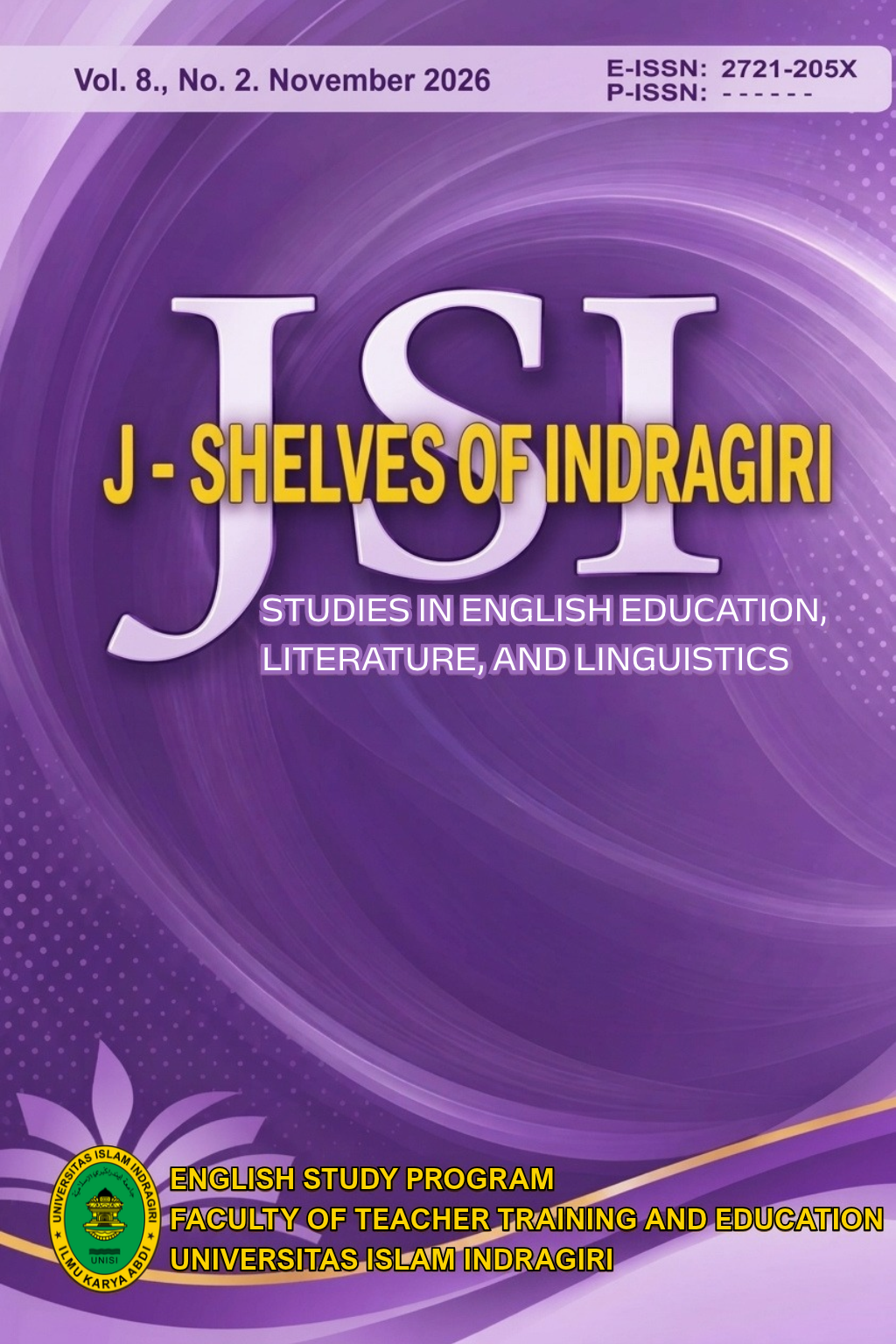
EXPLORING MUSLIM EFL LEARNERS' INTERCULTURAL AWARENESS THROUGH INTERACTION WITH INDONESIAN STUDENT TEACHERS IN SATUN, THAILAND
DOI:
Keywords:
Abstract
Intercultural awareness is an important aspect of English language learning, as English increasingly functions as a medium of communication among speakers from diverse linguistic and cultural backgrounds. However, existing studies on intercultural interaction largely privilege the perspectives of visiting student teachers, leaving limited understanding of how host-school learners themselves experience and manifest intercultural awareness through face-to-face interaction, particularly in linguistically and religiously distinct settings such as Muslim communities in Southern Thailand. This study aimed to explore how intercultural awareness is manifested and experienced among Muslim EFL learners through their face-to-face interaction with Indonesian student teachers during the KKNI International Teaching Practicum at a senior high school in Satun, Thailand. The study employed a qualitative case study design involving ten Grade 11 and Grade 12 Muslim EFL learners selected through purposive sampling. Data were collected through classroom observations and semi-structured interviews, supported by field notes and classroom teaching materials, and were analyzed thematically following Braun and Clarke’s (2006) six-phase framework.
Downloads
Downloads
Published
Issue
Section
License
Copyright (c) 2026 Nadia Mae, Selamat Husni Hasibuan

This work is licensed under a Creative Commons Attribution 4.0 International License.